Minimally Invasive Surgery
Percutaneous and endoscopic techniques that reduce surgical trauma, shorten recovery and preserve the paraspinal musculature.

Spine Neurosurgery

Philosophy
The spine is the axis of all movement, every posture, every active life. My commitment is to preserve it with the minimum surgical footprint necessary.
Every patient is a unique case. There are no generic protocols when you have been exposed to thousands of complex situations: the strategy is designed to respect the specific biomechanics of YOUR spine, prioritising restoration techniques and minimal invasion.
When being expeditious is unavoidable — major deformities, revision surgeries, fractures, tumours — the experience of thousands of cases cools the surgeon's mind and is YOUR peace of mind above any technology.
About my training and careerThis is not about operating, but about selecting the treatment. And quite often, the best option is not to operate.
Specialisation
Percutaneous and endoscopic techniques that reduce surgical trauma, shorten recovery and preserve the paraspinal musculature.
Personalised correction of mechanical balances in scoliosis or spondylolisthesis: experience + simulation software and intraoperative technologies (AR, VR, navigation…).
Unilateral micro-approaches for canal access (disc herniation, stenosis). Anterior approaches that keep the posterior stability elements intact.
Mechanical supplementation in instability cases or disc replacement in suitable candidates restores the lost capabilities of the back.
The scar is the least of it. Minimal invasion is not a smaller incision: it is solving the problem with the same guarantees while harming as little healthy muscle, ligament and bone as possible. Here we enter through the foramen, the opening the nerve root already uses, so the canal does not have to be opened artificially. If a smaller incision worsened the outcome, it would not be less invasive, only more cosmetic.
In spondylolisthesis, segmental instability and foraminal stenosis that requires fusion. A herniation or a stenosis without instability is dealt with by decompressing and preserving the stabilising structures, without fixing anything.
It depends, and that is exactly what has to be established before touching anything. The first step is a complete work-up to rule out a correctable problem: a non-union, a misplaced implant, a degenerated neighbouring segment or a back that has lost its curve. Those can be corrected surgically. If there is none, further surgery is not the answer.

Don’t be dazzled by the tools… Look for a surgeon who has seen it ALL.
Choose your preferred channel to get in touch or schedule an appointment.
The practice
In-person consultations take place inside NG Clínicas, in the centre of Elche. That is the address to come to on the day of the appointment. Visit NG Clínicas
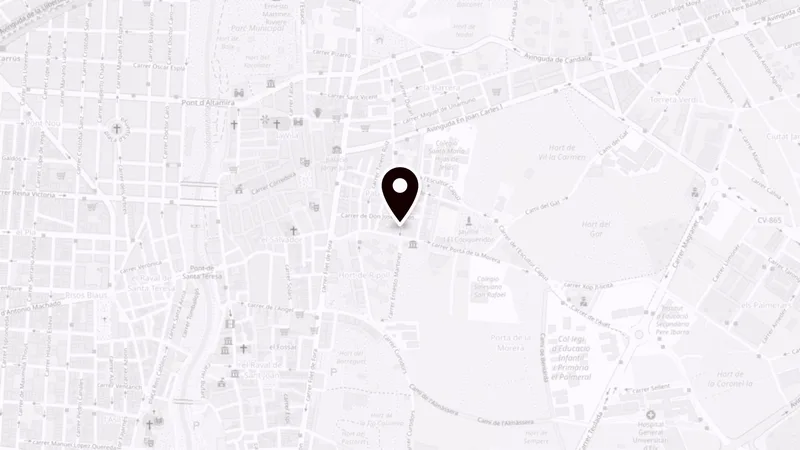 Open in Google Maps © OpenStreetMap contributors
Address
Calle Beethoven, 20
03203 Elche
Alicante · Spain
Telephone
Publications, guides and articles on spine conditions on my specialist blog.